Boston Public Library
Images of the Performing Arts

Detail from:
Serge Koussevitzky
Boston Public Library has a long history of collecting photographs documenting the performing arts, including theatrical work, live music, and dance in the 19th century. In the 20th century, movies, radio, and television became the dominant forms of entertainment and photography played a role in documenting and publicizing recorded and broadcast media.
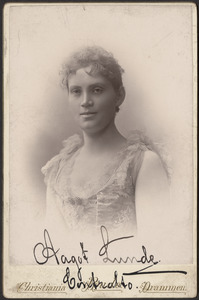
In the technical infancy of photography, the technology did not allow for photographing live performances. Instead, actors, dancers, musicians, and singers would be photographed in costume in photography studios, often posing to simulate their live performances. Two of the most dominant photographic formats of the 19th century -- cartes de visite and cabinet cards -- were primarily used for portraiture and were cheap enough to produce that people could collect photographs of their favorite performers. Along with photographs of political figures and athletes, photographs of performers helped create the concept of celebrity.
The evolution of photographic technology in the 20th century allowed photographers to capture live performances on-site and in action. Prerecorded or broadcast media like movies and radio presented a different challenge, as the performer and viewer were separated by time and space. To publicize these new media, photographers continued to take publicity portraits of performers but also photographed on movie sets and in the studios, and stills from movies and television were used to publicize these works.
Critical funding to support long-term preservation of and enhanced public access to Boston Public Library collections, including this one, was provided by the Associates of the Boston Public Library.
In the technical infancy of photography, the technology did not allow for photographing live performances. Instead, actors, dancers, musicians, and singers would be photographed in costume in photography studios, often posing to simulate their live performances. Two of the most dominant photographic formats of the 19th century -- cartes de visite and cabinet cards -- were primarily used for portraiture and were cheap enough to produce that people could collect photographs of their favorite performers. Along with photographs of political figures and athletes, photographs of performers helped create the concept of celebrity.
The evolution of photographic technology in the 20th century allowed photographers to capture live performances on-site and in action. Prerecorded or broadcast media like movies and radio presented a different challenge, as the performer and viewer were separated by time and space. To publicize these new media, photographers continued to take publicity portraits of performers but also photographed on movie sets and in the studios, and stills from movies and television were used to publicize these works.
Critical funding to support long-term preservation of and enhanced public access to Boston Public Library collections, including this one, was provided by the Associates of the Boston Public Library.